
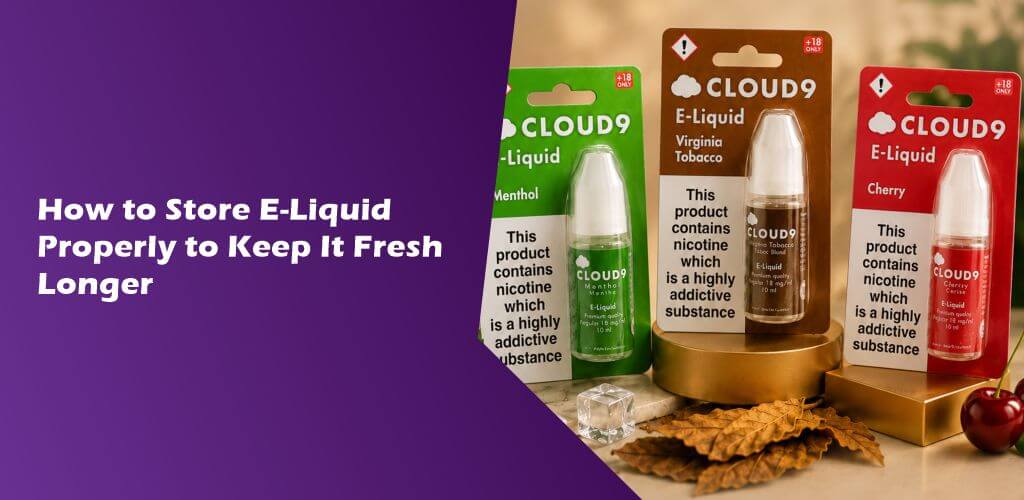
Your favourite e-liquid can lose its punch far quicker than you’d expect, and the cause usually has nothing to do with the bottle itself. Heat, light, and air quietly break down flavour and nicotine long before a bottle reaches its printed expiry date. Learning how to store e-liquid properly is the single easiest way to protect your investment, keep every puff tasting the way the flavourist intended, and get the most out of every bottle you buy.
At KLiquid, we spend a lot of time thinking about what happens to a bottle of e-liquid after it leaves our facility. Careful manufacturing means nothing if a bottle sits on a sunny windowsill for three months. This guide walks you through exactly how to keep e-liquid fresh longer, why storage conditions matter more than most vapers realise, and the simple habits that separate a satisfying vape from a flat, dull one.
By the end of this article, you’ll understand:
- Why proper storage protects flavour and nicotine strength
- Whether e-liquid actually expires and what shelf life really means
- The ideal temperature, light, and air conditions for storing vape juice
- How to spot e-liquid that has gone bad
- The common storage mistakes that quietly ruin good vape juice
- Practical steps for storing bottles at home, on the move, and long term
Why Does E-Liquid Need Proper Storage?
E-liquid is a chemical mixture, not an inert product that sits unchanged on a shelf forever. Every bottle contains propylene glycol (PG), vegetable glycerine (VG), flavourings, and in most cases nicotine. Each of these ingredients reacts to its environment, and the reactions speed up dramatically once you introduce heat, sunlight, or excess air.
Proper storage slows these reactions down. Store your bottles well and you preserve the balance the flavourist built into the recipe. Store them badly and you invite oxidation, flavour fading, colour changes, and a harsher, less pleasant vape.
This matters just as much for a premium blend as it does for a budget one. A carefully crafted flavour profile from KLiquid deserves storage conditions that let it perform the way it was designed to. Good storage habits protect the quality you paid for, whether you’re working through a single bottle or stocking up on a favourite from our e liquid range.
The Ingredients That Break Down First
Flavour compounds are usually the first thing to change in a poorly stored bottle. Delicate fruit and dessert notes fade fastest, while heavier tobacco or menthol profiles tend to hold up a little longer, though they still degrade over time. Nicotine follows a slightly different path, changing chemically through oxidation rather than simply “fading” in the way flavour does.
Does E-Liquid Expire? Understanding Shelf Life
Yes, e-liquid does expire, though “expiry” works a little differently than it does with food. Rather than becoming unsafe overnight, e-liquid gradually loses quality. The flavour flattens, the colour deepens, and the nicotine hit becomes less consistent. Most bottles carry a best-before date printed on the label, and this reflects genuine testing rather than a rough guess.
Typical e-liquid shelf life sits between one and two years when a bottle is stored correctly and remains unopened. Once you open a bottle and start using it regularly, that window shortens because each time you unscrew the cap, you introduce fresh oxygen and expose the liquid to whatever light and heat surround it at that moment.
How Long Can E-Liquid Stay Fresh?
An unopened bottle kept in a cool, dark cupboard can comfortably last close to its full best-before date. Once opened, aim to use the bottle within three to six months for the best flavour and nicotine consistency. This isn’t a hard cut-off; it’s a practical guideline based on how quickly oxidation and evaporation typically affect an in-use bottle.
Smaller bottles used daily tend to get used up before storage becomes a major issue. Larger bottles, or backup stock you’re not using yet, need more deliberate storage care simply because they sit around for longer.
The Best Way to Store Vape Juice: Temperature, Light, and Air
Three environmental factors do almost all the damage to e-liquid: heat, UV light, and oxygen exposure. Get these three right and you’ve solved most of the storage puzzle.
What Temperature Is Best for Storing Vape Juice?
Room temperature, ideally between 15°C and 20°C, works best for most e-liquid. Consistency matters as much as the actual number. A cupboard that swings between warm and cool throughout the day causes more damage than a slightly warmer space that stays steady.
Avoid storing bottles:
- Near radiators, ovens, or other heat sources
- In direct sun near a window
- In a car glovebox or boot, especially during warmer months
- Anywhere temperatures regularly climb above 25°C
Can Heat Change the Flavour of E-Liquid?
Heat accelerates every chemical reaction happening inside the bottle. Warm conditions speed up the breakdown of flavour compounds, causing sweet or fruity notes to fade first and dessert or creamy blends to taste flatter and less rounded. Heat also thins the liquid slightly and can darken its colour over time, both signs that the chemistry inside has shifted from its original state.
Should E-Liquid Be Refrigerated?
Refrigeration isn’t necessary for most vapers and can actually cause its own problems. Cold temperatures thicken VG-heavy liquids, and condensation can form inside the bottle once you take it out and it warms back up. If you do want to refrigerate long-term backup stock, seal bottles tightly, keep them upright, and let them return to room temperature fully before opening the cap or filling a tank. A cool, dark cupboard almost always works better than the fridge for everyday use.
Can Sunlight Damage Vape Juice?
Sunlight is one of the fastest ways to ruin a good bottle of e-liquid. UV light breaks down flavour molecules and accelerates nicotine oxidation, which is why direct sun causes noticeably faster degradation than almost any other storage mistake. This is also why most e-liquid bottles come in amber, brown, or otherwise tinted glass or plastic. That tint isn’t decorative; it blocks a significant portion of UV light from reaching the liquid inside.
Even tinted bottles benefit from being kept out of direct light. A dark drawer, cupboard, or storage box gives your bottles the best possible protection.
Can Air Exposure Affect Nicotine Strength?
Yes, and this is one of the most overlooked storage risks. Oxygen reacts with nicotine through a process called oxidation, gradually converting it into different compounds that don’t deliver the same throat hit or satisfaction. This is part of why an older bottle can taste noticeably harsher or “off” even if the flavour itself seems roughly intact.
How Oxygen Impacts Nicotine Oxidation
Every time you open a bottle, a small amount of air enters and mixes with the liquid inside. Occasional use won’t cause noticeable harm, but bottles left open, poorly sealed, or topped up repeatedly without proper sealing oxidise faster. Oxidised nicotine e-liquid often develops a darker colour and a slightly acrid or peppery taste compared to a fresh bottle.
Keeping Bottles Tightly Sealed
Always screw caps back on firmly straight after use. If you decant liquid into a smaller bottle for travel or refill a tank, seal both containers properly before putting them away. A loose cap left overnight can do more damage than several weeks of correct storage, simply because it allows continuous air exchange.
E-Liquid Storage Tips for Home, Travel, and Long-Term Stock
Different situations call for slightly different approaches. Here’s how to keep vape juice fresh whether you’re storing a single bottle at home or holding onto a larger collection.
Everyday Home Storage
- Keep bottles upright in a cupboard or drawer away from windows and appliances
- Choose a spot with stable, moderate temperature
- Store bottles in their original box or packaging where possible
- Keep your everyday bottle separate from backup stock so you’re always reaching for the freshest one first
Original Packaging Benefits
The box your e-liquid arrives in does more than look good on a shelf. Original packaging typically offers an extra layer of light-blocking protection and helps shield the bottle from minor knocks and temperature swings. Holding onto the box for any bottle you’re not using straight away is a simple habit that pays off in flavour quality later.
Proper Bottle Positioning
Store bottles upright rather than on their side. Upright storage reduces the surface area of liquid in contact with the air pocket at the top of the bottle and lowers the risk of leaks around the cap or dripper tip. This is a small detail, but it matters more over months of storage than most vapers expect.
Travel Storage
When you’re out and about, keep bottles in a bag pocket away from direct sun rather than a car dashboard or window ledge. A small padded pouch protects glass bottles from knocks and keeps direct light off the liquid. If you’re travelling somewhere hot, treat your e-liquid the way you’d treat any temperature-sensitive item and keep it out of parked vehicles.
Long-Term Storage Recommendations
If you’re stocking up on a favourite flavour from KLiquid’s ecig liquid range, treat those bottles as long-term stock rather than everyday bottles:
- Store them in a dark cupboard, ideally in a room that doesn’t get too warm
- Keep them in original packaging with caps sealed tightly
- Rotate stock so older bottles get used before newer ones
- Check bottles periodically for any colour or clarity changes
Storage Recommendations for Different Bottle Sizes
Smaller bottles, such as 10ml nic shots or shortfills you use quickly, are less exposed to long-term storage risk simply because they don’t sit around as long. Larger shortfill bottles benefit more from careful storage because they take longer to use up, giving heat, light, and air more opportunity to cause damage. If you buy in bulk, consider decanting a smaller amount into a daily-use bottle and keeping the rest sealed and stored properly until needed.
Short-Term vs Long-Term Storage: What’s the Difference?
| Factor | Short-Term Storage (daily use) | Long-Term Storage (backup stock) |
| Location | Bedside drawer, bag, desk | Dark cupboard, cool room |
| Cap handling | Sealed between uses | Sealed tightly, untouched |
| Light exposure | Minimise where possible | Must be avoided entirely |
| Temperature | Room temperature | Stable, cool room temperature |
| Packaging | Bottle alone is fine | Keep in original box |
| Check frequency | Every use | Every few weeks |
Short-term storage is about convenience balanced with a bit of care. Long-term storage is about actively protecting a bottle you won’t touch for weeks or months, which means every precaution matters more.
How Do You Know If E-Liquid Has Gone Bad?
E-liquid rarely goes “bad” in a dangerous sense, but it can degrade to the point where it’s no longer enjoyable to vape. Watch for these signs:
- Noticeably darker colour than when you bought it
- Thicker or syrupy texture that wasn’t there before
- A flat, muted flavour with little of the original character
- A harsh, peppery, or acrid taste, often a sign of nicotine oxidation
- A separated or cloudy appearance in a liquid that used to be clear
If you notice several of these signs together, the bottle has likely passed its useful life even if it’s technically still within its printed best-before window. At that point, the vaping experience simply won’t match what a fresh bottle delivers.
Safe Disposal of Expired E-Liquids
Never pour old e-liquid down the sink or throw an open bottle straight in general waste. Nicotine-containing liquid counts as hazardous household waste in the UK. Check with your local council for household hazardous waste disposal points, many of which accept small quantities of e-liquid alongside other chemical waste. Keep the bottle sealed until you’re ready to dispose of it properly, and never leave it somewhere a child or pet could reach it.
Storage Mistakes Every Vaper Should Avoid
A few small habits cause the vast majority of premature flavour loss:
- Leaving bottles on a windowsill. Even brief daily sun exposure adds up over weeks.
- Storing near the cooker, radiator, or in direct sunlight through a car window. Heat is relentless in its effect on flavour compounds.
- Not fully tightening the cap after use. This is the single easiest mistake to fix and one of the most damaging to ignore.
- Storing bottles on their side for long periods. This increases the liquid surface exposed to the air pocket inside the bottle.
- Forgetting about backup bottles. Out of sight often means out of mind, and a forgotten bottle in a warm cupboard can degrade significantly before you rediscover it.
- Buying more than you can use within a reasonable window. Fresh, smaller, more frequent purchases usually beat one large bottle that sits around for months.
Child-Safe Storage Matters Too
Alongside flavour and nicotine preservation, safe storage is about keeping e-liquid away from children and pets. Always store bottles:
- Out of reach and out of sight of children
- With child-resistant caps fully secured
- Away from anything that looks like food or drink packaging
- In a separate area from household chemicals to avoid confusion
This applies to every bottle in your home, whether it’s your daily vape juice or backup stock you’re saving for later.
Why KLiquid’s Approach to Quality Makes Storage Worth Getting Right
For over 25 years, KLiquid has been part of the vaping and smoking accessories industry, and that experience shapes how we think about the products we put our name on. UK-made blends, careful sourcing, and consistent flavour profiles across our range mean that a bottle of premium e-liquid UK vapers reach for should perform the same way from the first drop to the last.
That consistency only shows through when storage conditions support it. A carefully balanced nicotine e-liquid or a bold, layered vape flavour deserves a cool, dark cupboard and a tightly sealed cap, not a sunny shelf or a hot car boot. Getting storage right is a small effort that protects the quality we work hard to build into every batch.
Frequently Asked Questions
Why does e-liquid need proper storage?
E-liquid contains flavour compounds and nicotine that react to heat, light, and air. Proper storage slows these reactions down, keeping flavour balanced and nicotine strength consistent for longer.
Does e-liquid expire?
Yes. E-liquid doesn’t become dangerous overnight, but it gradually loses flavour quality and nicotine consistency. Most bottles carry a best-before date reflecting genuine shelf-life testing.
How long can e-liquid stay fresh?
An unopened bottle stored correctly can last close to its full best-before date, typically one to two years. Once opened, aim to use it within three to six months for the best flavour and nicotine quality.
Can sunlight damage vape juice?
Yes. UV light breaks down flavour molecules and speeds up nicotine oxidation, making direct sunlight one of the fastest ways to degrade a bottle of e-liquid.
Should e-liquid be refrigerated?
Not usually. Cold temperatures can thicken VG-heavy liquids and cause condensation issues. A cool, dark cupboard at stable room temperature works better for most vapers.
What temperature is best for storing vape juice?
Between 15°C and 20°C, kept as stable as possible. Avoid spots near radiators, ovens, windows, or parked cars.
Can heat change the flavour of e-liquid?
Yes. Heat speeds up the breakdown of flavour compounds, causing fruity and dessert notes to fade fastest and flavours overall to taste flatter and less defined.
Can air exposure affect nicotine strength?
Yes. Oxygen reacts with nicotine through oxidation, gradually changing its chemical structure and reducing the smoothness and consistency of the throat hit.
How do you know if e-liquid has gone bad?
Look for darker colour, thicker texture, muted flavour, a harsh or peppery taste, or cloudiness. Several of these signs together suggest the bottle has passed its useful life.
What storage mistakes should every vaper avoid?
Leaving bottles in sunlight or heat, storing them on their side, not sealing caps tightly, and forgetting about backup stock in warm cupboards are the most common mistakes that quietly ruin good e-liquid.
Keep Every Bottle Tasting Its Best
Proper storage is a small habit with an outsized effect on your vaping experience. A cool, dark cupboard, a tightly sealed cap, and a bit of attention to how long a bottle has been open protect the flavour and nicotine quality you’re paying for. Once you understand how to store e-liquid properly, you’ll notice the difference in every vape, from the first inhale of a new bottle to the last few millilitres at the bottom.
KLiquid puts real care into every batch we produce, from ingredient sourcing to flavour development, and it only makes sense to protect that work with equally careful storage at home. Explore our full range of premium e-liquid UK flavours and find your next favourite blend, then give it the storage it deserves to keep tasting exactly as intended, bottle after bottle.